
On the second day of my 60km journey, I woke up again very early, sometime around 615am. I slept like a brick that night and it was nearly a full moon so I had plenty of light to help me pack up camp. After I packed up, I made coffee and set off. The thing I learned very early on this day, was I CANNOT hike with coffee. I am sure many people reading this are going “duhh!” but after years of front-country experience, where I start every morning with food and coffee, usually out of the cooler, it was a new experience having no interest in coffee in liquid form because every sip just made me thirstier than the last. After about 3km I actually dumped it out so I wouldn’t be tempted anymore and switched to water and bio steel for the rest of the day.
Heading off today the plan was to continue to hike north towards the Eatonville and day use trails, and see a sea stack called the Three Sisters. I took the “backcountry trail” there, and it was very tight, probably not seeing near as much maintenance as the main Coastal trail that I was following, so it was rough going but ended up connecting to the day use trails directly without going to the secondary visitor center. I learned a lot about Eatonville, its shipbuilding history and its sea stacks in general. This part of the park was closed for the season already, but I was assured when I checked in that all that meant was that there was no parking at the north end of the park, so I had the whole area to myself.
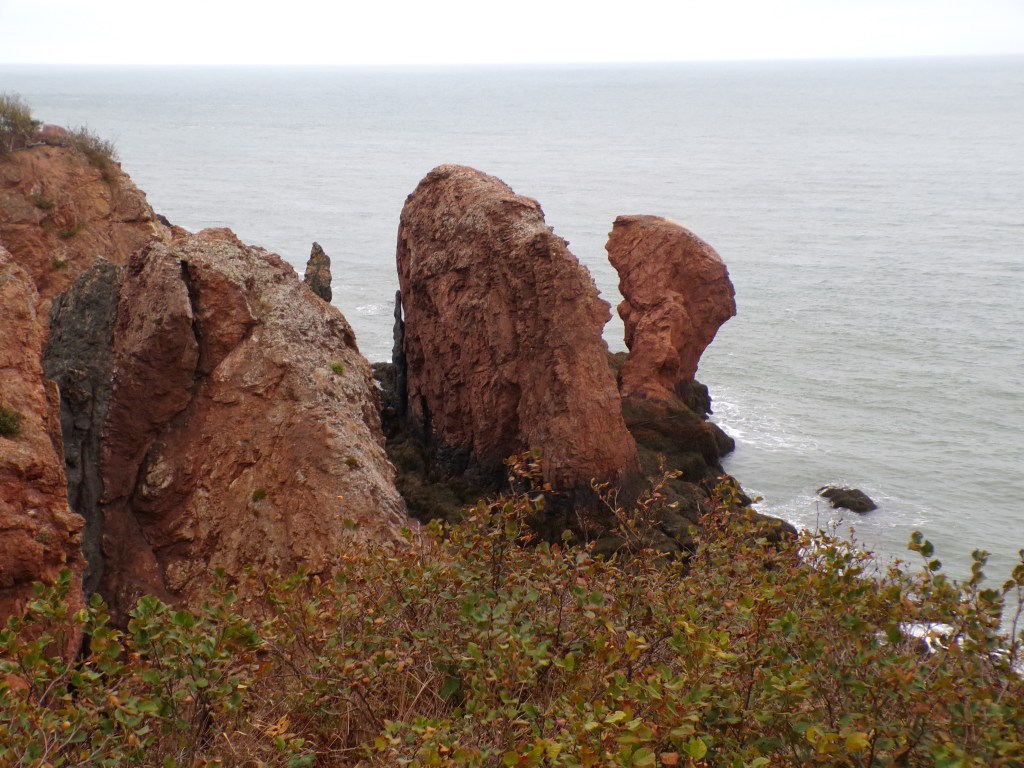
The Three Sisters
I am an eternal skeptic when it comes to rock formations that claim to have faces in them, I can’t see anything other than rocks usually! But this was different, my pictures don’t do it justice but I actually saw the faces and there are a couple of interpretive signs that talk about the story of the formations and the legend surrounding them. The day use trails to access the viewpoints are well maintained and very flat, a welcome break and good way to ease into the total distance I was traveling today which ended up being around 24km.
The Coastal Trail
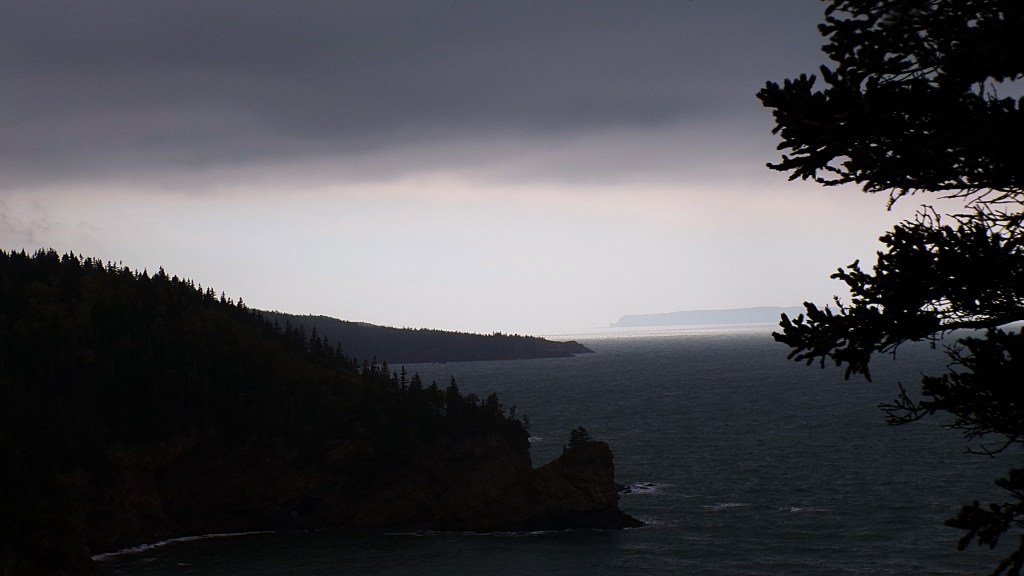
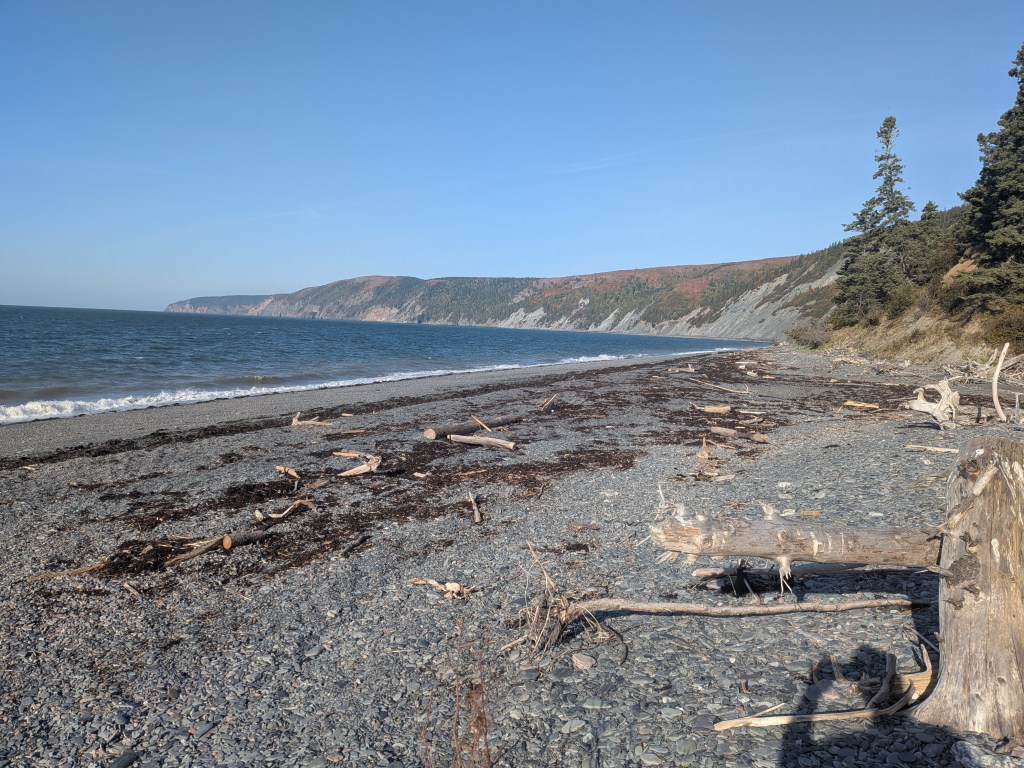
Once I got done with my rather touristy side quest, I was back on the main trail and now headed towards the coastal section. This was the part of the trip that I was most looking forward to, this is where I had made a plan to take the day a little slower and take tons of photos, really enjoy the day. The day from a weather standpoint wasn’t great, I knew that storm was coming in within the next day or two, and that produced drizzly and overcast conditions for most of the morning. Sadly, as a I progressed the phots all started to look alike, and then came the elevation change. For those that haven’t been, the Fundy coastline is very rocky and marked by cliffs and many streams, a lot of it was formed by receding glaciers, so imagine a ball of sand, that someone had taken a chuck out by squeezing their fingernails together, and then filled the chunk with water, the real world effect is simply seen while you hike, whenever you come to a stream, you drop about 70-110m and then you climb back up, often within 1 or 2 km. This was tough, definitely the hardest part of the hike to this point, by noon my knees were starting to really feel it. Luckily the weather started to get better so I was able to ignore my aches and pains and have a really nice time. Walking along the coast, the thing that struck me compared to the previous day was the noise. Not just the wind whipping me in the face, but the waves hitting the rocks, it was like hearing a three-car collision every couple of minutes, I wondered if I would be able to sleep tonight as I went along, knowing that my campsite was just up from a rocky beach. In the afternoon the sun came out, the wind stayed strong but it warmed up a little and I was able to shed a layer and have a very enjoyable time just hiking along, lost in my own thoughts.
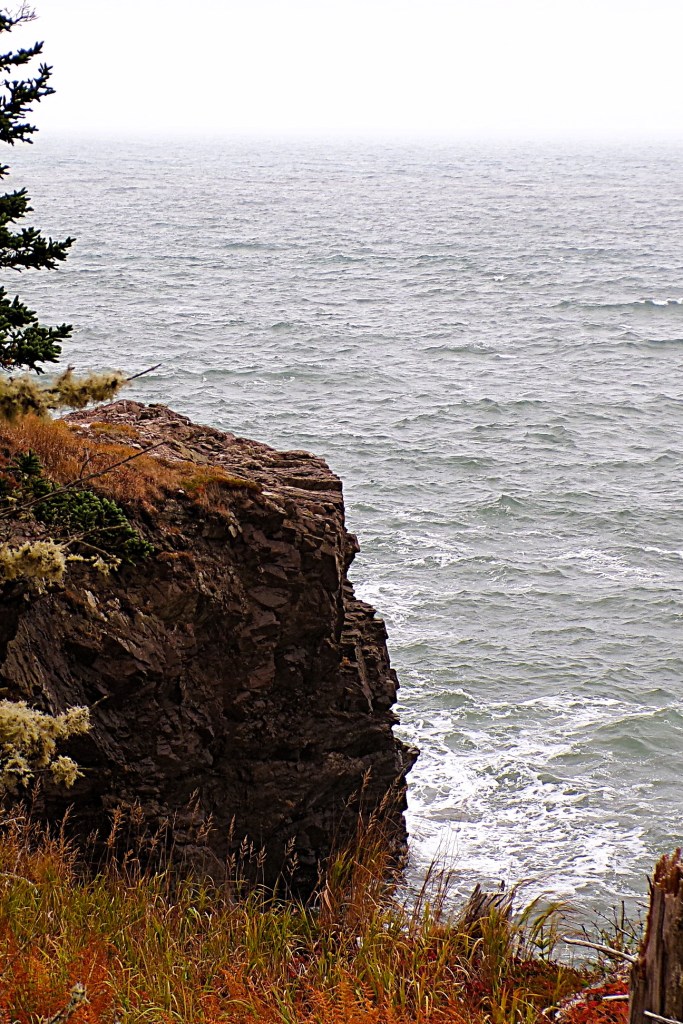
Little Bald Rock
I am camping a Little bald rock tonight, the last water station is set up at Big bald rock, which is where I took one of my last breaks on the day. The two sites are about 4km away from each other. So, as I’m sat at a picnic table, these are the thoughts running through my head:
- Should I stay here tonight rather than carry on?
- If I do that, will I be able to make it to the visitor center tomorrow before the rainstorm rolls in?
- Do I have the energy left to carry enough water to the campsite to last the night and the morning before I can make it to the next water station?
So, I started to think and answer the questions in my mind. I didn’t want to stay there because it wasn’t part of the plan, which in the real world is a ridiculous thought, but the weather was favorable and it was still early, around 4pm, sun was setting just after 6pm or so, so there was time to make it, even at a slow pace. I also believed that the extra 4km added to tomorrow would delay me to beating the storm, so I would have to push on. Answering the last question was tough, especially because at that moment I was completely gassed. I figured I had just enough energy to set up camp and fall asleep, but in the end, I decided to push myself and get through. In order to make sure I had enough water, I filled all my reserves, and then filled my kettle, which I could not strap back to my pack lest the water fall out on the way, and with my bag done up and my kettle in ne hand and Yeti in the other, started walking to my campsite. I got about ten steps forward and nearly fell down the hill because I was very unbalanced now and unable to brace myself with my hands full, but there was no going back now so I had to push on. After about a kilometer and a half my mind and body were screaming to turn back, instead, I started to count steps. I know that one of my strides is about half a meter, so I needed to count to two thousand and that would be one km. I started doing this with about 2km to go, but counting steps was incredibly boring, so to keep my mind occupied, I pretended that I was climbing the stairs of a mountain top temple in some far-flung corner of the world to make tea for whoever was at the top. Incredibly the little mental trick along with counting steps worked, and I made it to my campsite in just over an hour and with my second wind was able to get my camp setup and dinner made and then sit and relax and most importantly, stretch after an extremely long day. By now the weather had turned back to dreary and no sooner had I entered my tent than I was asleep. I only woke up once in the night, the waves hitting the beach were actually quite pleasant, a departure from the morning wave sounds, but the book I had brought to read in downtime, would go again unread.

 The Maritime Adventure
Leave a comment